
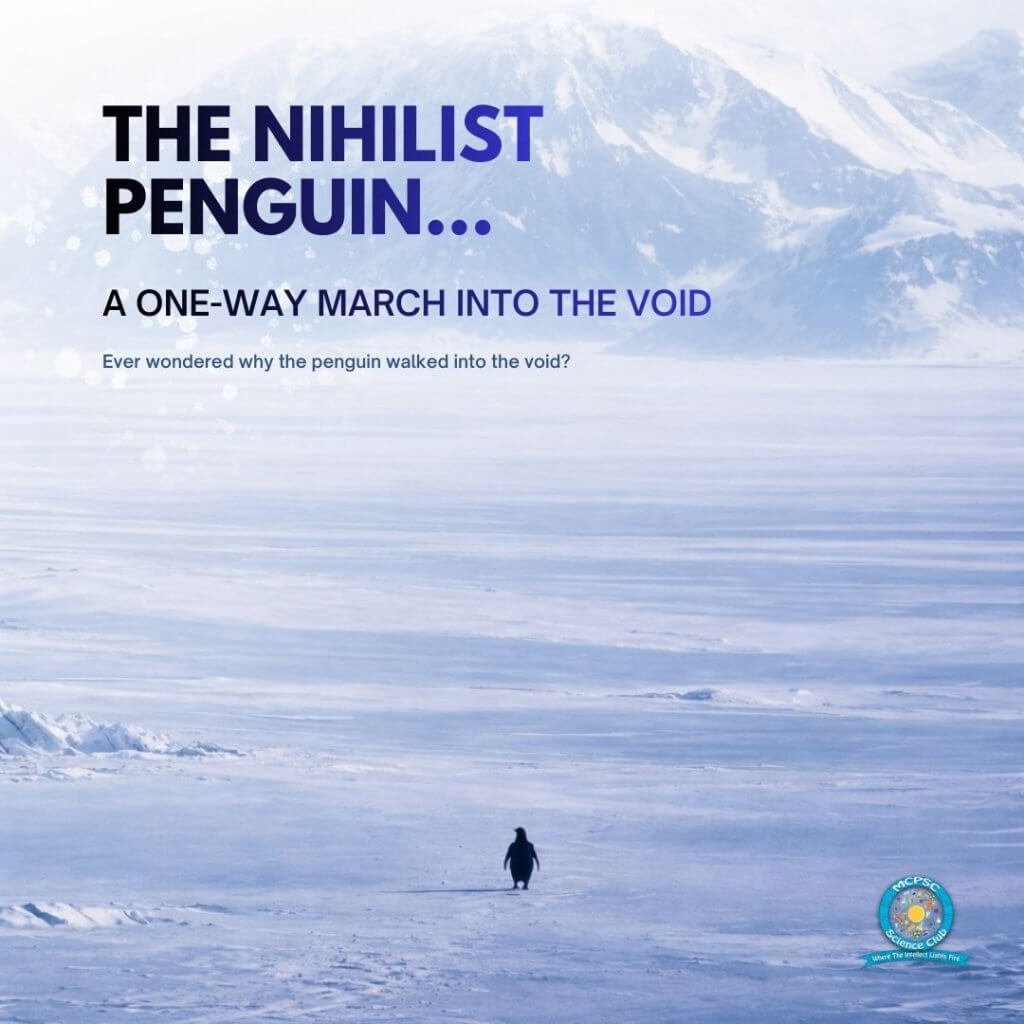
In Werner Herzog’s haunting 2007 documentary, Encounters at the End of the World, a lone Adélie penguin famously turned its back on survival to embark on a chilling 70 kilometer “death march” toward the continent’s barren interior. While its peers headed for the life-giving sea, this bird was driven by a total biological “glitch”, a navigational failure where its internal compass likely mistook the desolate mountains for its destination. This wasn’t a choice fueled by sadness, but a mechanical error of nature; even if human rescuers had physically dragged it back to the colony, the penguin would have immediately turned around to resume its trek into the void. It was gripped by a singular, obsessive drive that overrode every instinct for self-preservation, eventually walking until it became a tiny, solitary speck on the horizon before succumbing to exhaustion and the sub-zero elements. It remains a haunting example of how the natural world can be as indifferent as it is beautiful, leaving us to wonder what it “felt” as it marched toward a horizon it could never truly reach. This solitary trek into the unknown serves as a profound reminder that nature operates on its own inscrutable logic, far removed from our human narratives of hope or despair.