
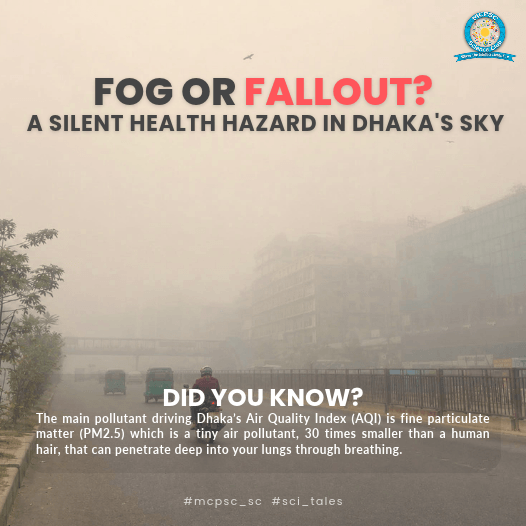
Dhaka recently plunged into a severe environmental crisis, recording the most hazardous air quality globally. IQAir data revealed that the city’s Air Quality Index (AQI) surged to a staggering 336 on a Tuesday morning, the highest seasonal peak, placing Kolkata (266) and Lahore (219) second and third. Local monitoring further exposed alarming hotspots across the metropolis, led by Badda’s Progati Sarani at 490, Gulshan Lake Park at 483, and Bashundhara Block G at 474. Additional critical levels appeared in Baridhara Park Road (455), the BIDS center (431), and Baridhara Lakeside (424), alongside elevated readings in Eastern Housing. What makes this invisible threat so devastating for residents? The crisis is driven by dense PM2.5 particulate matter, microscopic dust capable of penetrating deep into human lung tissue. Experts warn that chronic exposure severely threatens public health, particularly endangering children, the elderly, and respiratory patients. Shockingly, Air Quality Life Index data indicates that persistent pollution has shortened average life expectancy in Dhaka by nearly seven years and seven months. To protect themselves during these hazardous conditions, citizens must wear protective masks outdoors, keep windows firmly closed, avoid outdoor exercise, and prioritize indoor safety until air quality improves.